
October 7, 2026. 11:44 AMResources
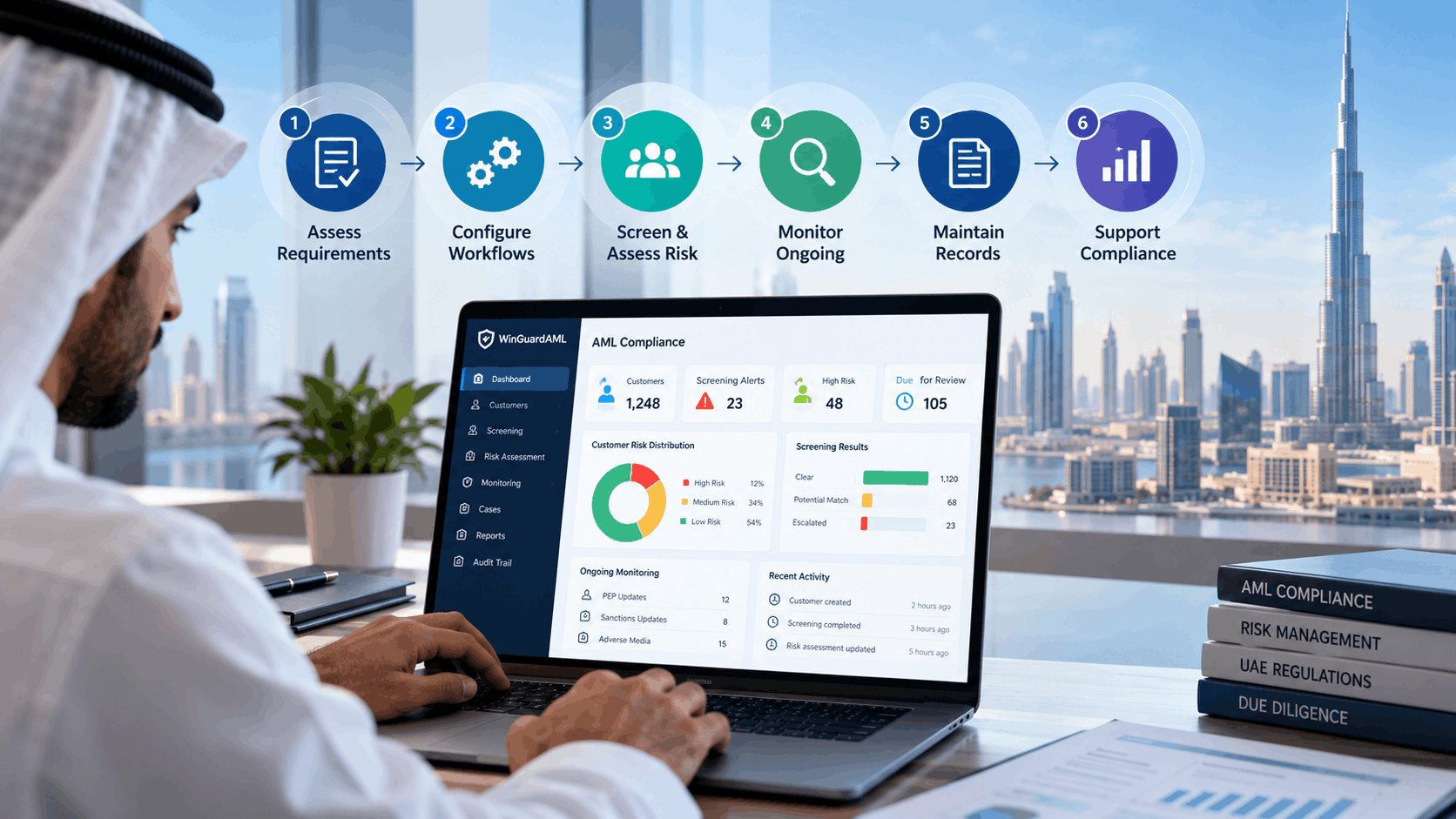
Step-by-Step: Integrating AML Compliance Software in the UAE
AML compliance in the UAE involves much more than conducting customer screening or maintaining identification documents.Regulated businesses need to understand their financial crime risks, conduct Customer Due Diligence (CDD), identify beneficial owners, assess customer risk, apply Enhanced Due Diligence (EDD) where necessary, perform appropriate sanctions and PEP screening, maintain records, monitor relevant changes, train employees,

October 7, 2026. 11:25 AMResources
AML Compliance Checklist for Real Estate Firms in Dubai
Dubai’s real estate sector attracts buyers, sellers, investors, and businesses from around the world. The international nature of the market, high-value transactions, complex ownership structures, and involvement of different payment methods can also create exposure to money laundering and other financial crime risks.Real estate brokers, agents, and other businesses falling within the applicable Designated Non-Financial
September 23, 2026. 12:45 PMResources
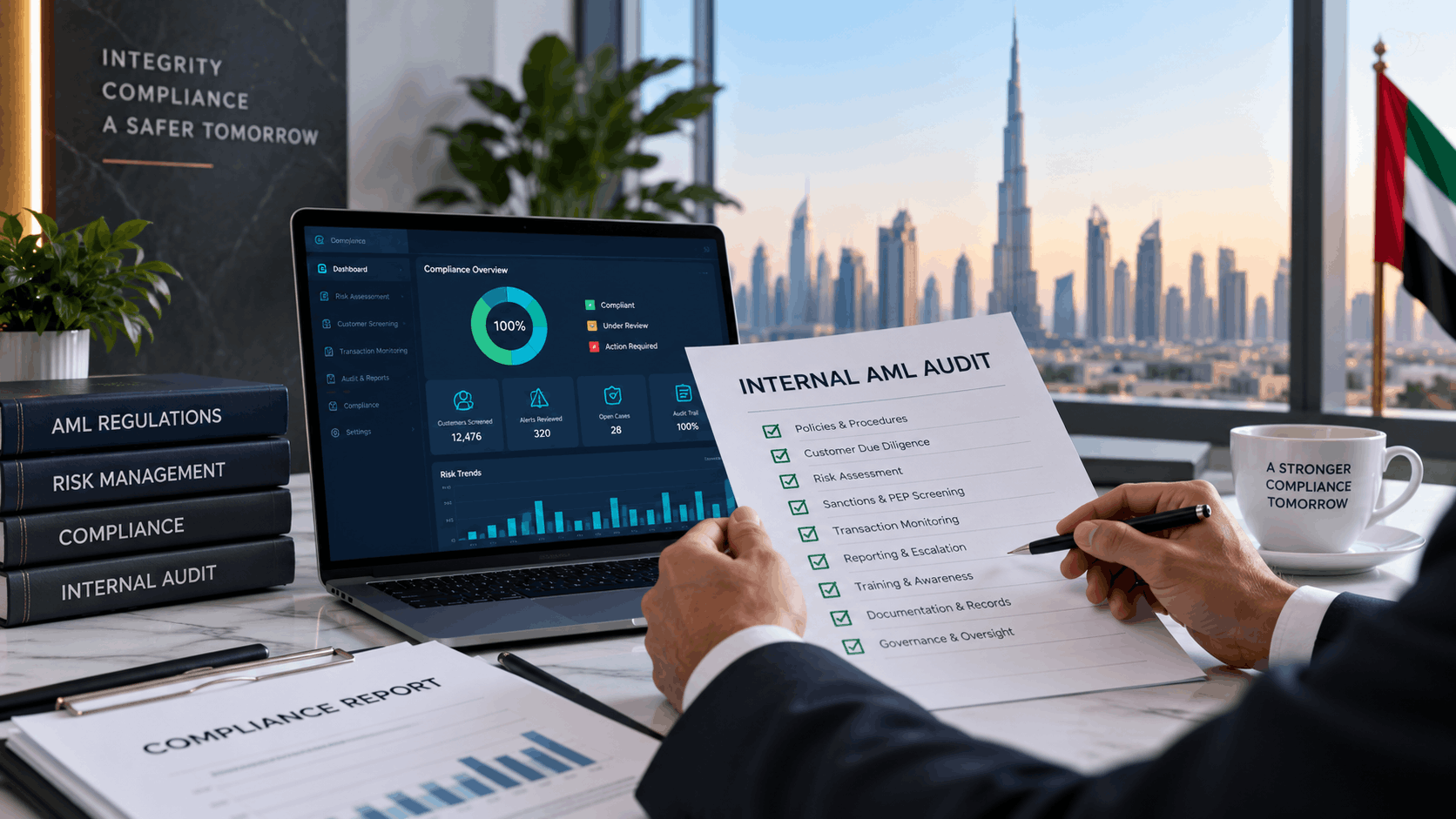
How Internal AML Audits Help UAE Businesses Reduce Regulatory Risk
The UAE has established a comprehensive regulatory framework to combat money laundering, terrorist financing, proliferation financing, and other financial crimes. Businesses operating within regulated sectors are expected not only to establish appropriate AML/CFT policies and controls but also to ensure that those controls are working effectively in practice.This is where Internal AML Audits play an

September 23, 2026. 12:26 PMResources
How AI Is Transforming AML Compliance Software in the UAE
The UAE’s position as a global financial and business hub means that financial institutions and Designated Non-Financial Businesses and Professions (DNFBPs) operate in an environment involving diverse customers, international transactions, complex ownership structures, and cross-border business relationships.As financial activity becomes increasingly digital, compliance teams are also dealing with growing volumes of customer information, screening results,

September 1, 2026. 2:55 PMResources
Beyond AML Systems: How UAE Exchange Houses Can Strengthen Compliance Effectiveness
Introduction Exchange houses in the UAE operate within a highly regulated financial environment where Anti-Money Laundering (AML), Counter-Terrorist Financing (CFT), sanctions compliance, customer due diligence, transaction monitoring, and regulatory reporting form an integral part of day-to-day operations. Most licensed exchange houses already have established compliance systems, screening solutions, transaction monitoring processes, and internal controls in

September 1, 2026. 2:27 PMResources
Why Real Estate Brokers Need AI for AML Compliance
Introduction The UAE real estate market attracts buyers, investors, and businesses from across the world. While this international reach creates significant opportunities for real estate brokers, it also exposes the sector to money laundering, terrorist financing, sanctions, and other financial crime risks. Real estate brokers and agents operating within the regulated UAE real estate sector

August 20, 2026. 2:04 PMResources
Manual vs Automated AML Compliance in UAE Real Estate: What Works Best?
Introduction The UAE real estate sector involves high-value transactions, international investors, corporate buyers, and customers from a wide range of jurisdictions. These characteristics can create exposure to money laundering and other financial crime risks, making effective Anti-Money Laundering (AML) controls particularly important for regulated real estate businesses. Traditionally, many real estate companies have managed AML

August 20, 2026. 1:47 PMResources
Why AML Compliance Services Are Crucial for Your Business’s Success
Introduction Anti-Money Laundering (AML) compliance has become an important part of doing business in the UAE, particularly for organizations operating in regulated and higher-risk sectors. As financial crime risks evolve and regulatory expectations become more sophisticated, businesses need effective systems to identify customers, assess risks, maintain records, monitor business relationships, and respond appropriately to suspicious

August 3, 2026. 4:57 PMResources
How AML Compliance Software Helps Meet UAE Central Bank Requirements
Introduction The Central Bank of the UAE (CBUAE) plays a critical role in safeguarding the country’s financial system by establishing comprehensive Anti-Money Laundering (AML) and Counter-Financing Terrorism (CFT) requirements for licensed financial institutions. Banks, finance companies, exchange houses, payment service providers, and other regulated financial institutions are expected to implement effective compliance frameworks that identify,
August 3, 2026. 4:10 PMResources
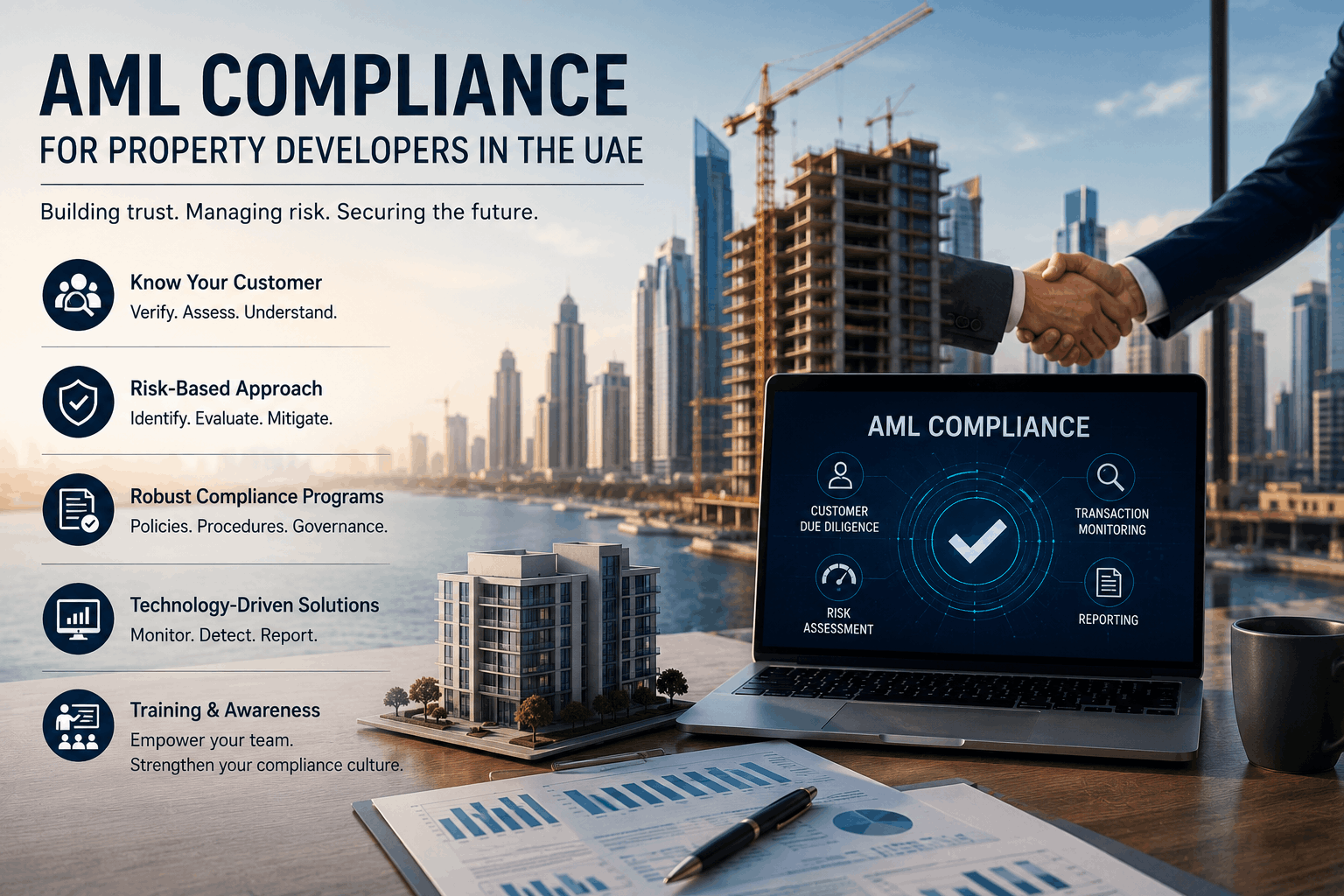
AML Compliance Services for Property Developers in the UAE
Introduction The UAE’s real estate sector continues to attract significant domestic and international investment, with property developers managing projects worth millions—or even billions—of dirhams. Large capital flows, multiple stakeholders, cross-border investors, and complex ownership structures make the sector vulnerable to financial crime risks. Although AML/CFT obligations currently apply directly to specific regulated entities such as