Introduction
The UAE’s real estate sector continues to attract significant domestic and international investment, with property developers managing projects worth millions—or even billions—of dirhams. Large capital flows, multiple stakeholders, cross-border investors, and complex ownership structures make the sector vulnerable to financial crime risks.
Although AML/CFT obligations currently apply directly to specific regulated entities such as real estate brokers and agents, property developers also operate within the same real estate ecosystem and frequently interact with regulated entities, financial institutions, investors, and government authorities.
For this reason, many developers are voluntarily strengthening their internal compliance frameworks by adopting AML best practices and leveraging professional AML Compliance Services in the UAE.
Why AML Best Practices Matter for Property Developers
Property developers regularly deal with:
- High-value property transactions
- International investors
- Corporate purchasers
- Ultimate Beneficial Owners (UBOs)
- Multiple funding sources
- Escrow arrangements
- Real estate brokers and agents
- Financial institutions
These activities naturally expose businesses to financial crime risks. Adopting AML controls demonstrates good corporate governance while helping developers better understand who they are doing business with.
Building a Strong Compliance Framework
Although not specifically regulated in the same way as real estate brokers, property developers can benefit from implementing AML controls similar to those adopted across regulated industries.
These include:
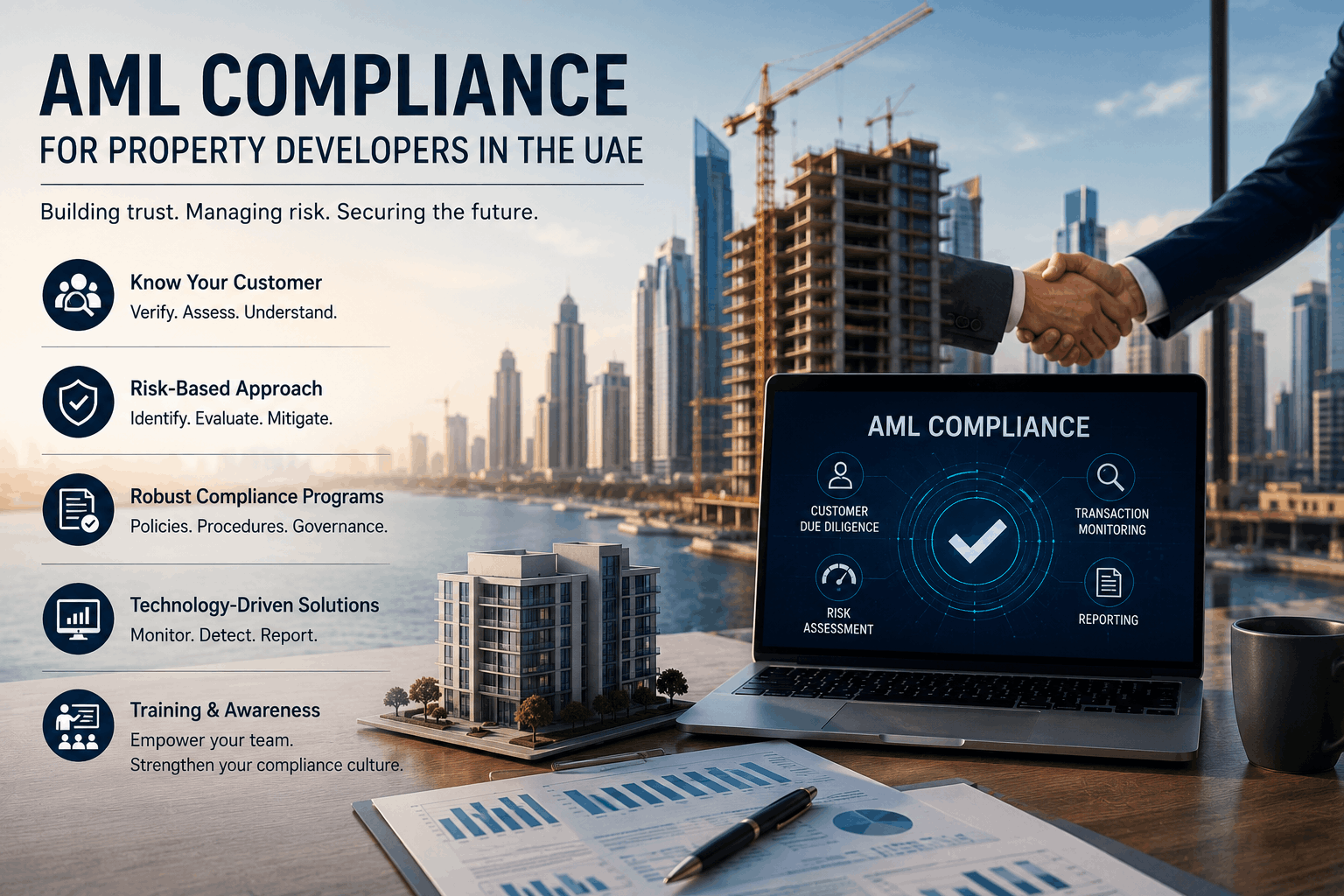
- Customer identification and verification
- Risk-based customer assessments
- Ultimate Beneficial Owner (UBO) identification
- Source of funds verification for higher-risk transactions
- Sanctions and PEP screening
- Ongoing customer monitoring
- Record retention
- Internal compliance policies
- Employee awareness and training
These measures support stronger risk management while promoting transparency throughout the customer lifecycle.
Benefits of AML Compliance Services
Rather than focusing solely on regulatory compliance, AML services provide broader business value.
Professional AML consultants can assist developers with:
Enterprise Risk Assessments
Understanding exposure to financial crime risks across projects, investors, customers, suppliers, and business relationships.
AML Policies and Internal Controls
Developing internal procedures that support good governance and consistent customer onboarding practices.
Customer Due Diligence
Helping verify customer identities, ownership structures, and source of funds where appropriate.
AML Compliance Software
Technology can automate:
- Customer onboarding
- Risk scoring
- Sanctions screening
- PEP screening
- Document management
- Ongoing monitoring
- Audit trails
Automation improves efficiency while reducing manual workloads.
Staff Training
Training commercial, sales, finance, and customer relationship teams to recognize potential AML red flags.
Working Alongside Regulated Entities
One important reason developers should adopt AML best practices is that they regularly work with:
- Real estate brokers
- Real estate agents
- Financial institutions
- Legal advisors
- Escrow service providers
- International investors
Many of these parties operate under formal AML obligations.
Having strong internal compliance procedures helps create smoother onboarding processes, improves due diligence, and strengthens relationships with regulated business partners.
Supporting Investor Confidence
Today’s investors increasingly value transparency and strong governance.
Developers that implement AML best practices demonstrate:
- Responsible corporate governance
- Better risk management
- Stronger internal controls
- Improved operational transparency
- Commitment to ethical business practices
These qualities can strengthen relationships with institutional investors, lenders, and international partners.
Preparing for the Future
AML regulations continue to evolve worldwide.
While current UAE requirements primarily apply to regulated sectors, adopting AML frameworks today helps property developers prepare for future regulatory developments without requiring significant operational changes later.
Businesses that invest in compliance early are often better positioned to adapt as expectations evolve.
Benefits of AML Software
Modern AML software can help developers:
- Screen customers efficiently
- Maintain centralized records
- Support internal risk assessments
- Improve document management
- Strengthen audit readiness
- Monitor higher-risk business relationships
- Improve operational efficiency
Technology enables developers to implement governance controls without creating excessive administrative burdens.
Conclusion
Although property developers are not currently subject to the same AML/CFT obligations as real estate brokers and agents, implementing AML best practices offers significant long-term benefits. Developers operate in a sector characterized by high-value transactions, international investors, and frequent collaboration with regulated entities, making robust governance and risk management increasingly important.
By adopting AML Compliance Services in the UAE and leveraging modern AML software, property developers can strengthen internal controls, enhance investor confidence, support responsible business practices, and position themselves for future regulatory developments. In an increasingly transparent and compliance-focused business environment, proactive AML measures are not only good governance—they are a strategic investment in long-term business resilience.