Introduction
As the UAE real estate sector continues to grow, regulatory expectations around Anti-Money Laundering (AML) compliance are becoming more stringent. Real estate brokers, developers, and agents are classified as Designated Non-Financial Businesses and Professions (DNFBPs), making AML compliance a mandatory requirement.
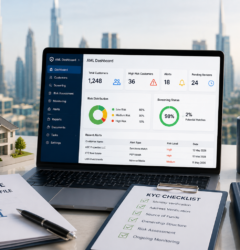
Manual compliance processes are no longer sufficient for managing customer onboarding, risk assessments, sanctions screening, and REAR reporting. This is why many firms are investing in AML Compliance Software in UAE to automate compliance activities and improve regulatory readiness.
However, selecting software is only the first step. To achieve the full benefit, real estate companies need a structured approach to implementation.
Step 1: Assess Your AML Requirements
Before selecting an AML system, firms should evaluate their compliance needs based on:
- Number of customers and transactions
- Type of clients (individuals, companies, offshore entities)
- Geographic exposure
- High-risk transaction types
- Current reporting obligations
Understanding these requirements will help determine what type of AML Software for Real Estate is most suitable for your business.
Step 2: Identify the Key Features You Need
Different AML platforms offer different capabilities. Real estate firms should prioritize solutions that include:
- Customer onboarding and KYC verification
- UBO identification and ownership structure verification
- Sanctions and PEP screening
- Risk assessment and customer scoring
- Ongoing monitoring of registered customers
- REAR reporting support
- Centralized document management
Selecting the right features ensures that the software aligns with both regulatory obligations and business operations.
Step 3: Prepare Internal Policies and Processes
Technology alone is not enough. Before implementation, firms should ensure that internal AML policies and procedures are clearly documented.
This includes:
- Customer Due Diligence (CDD) procedures
- Enhanced Due Diligence (EDD) for high-risk clients
- Customer risk classification methodology
- Internal escalation and reporting processes
- Record retention policies
The software should support these processes rather than replace them.
Step 4: Clean and Organize Existing Customer Data
Before migrating to a new system, businesses should review existing customer records and documents.
This process may include:
- Updating expired customer documents
- Removing duplicate records
- Verifying missing information
- Organizing trade licenses, passports, Emirates IDs, and UBO documents
Clean data improves the accuracy of AML screening and risk assessment.
Step 5: Train Employees on the New System
Successful implementation depends on user adoption. Employees should receive training on:
- How to onboard customers using the software
- How to review sanctions and PEP screening results
- How to assess customer risk levels
- How to update customer profiles
- How to maintain documentation and audit trails
Training ensures that the software is used correctly and consistently across the business.
Step 6: Work with an AML Compliance Consultant
Many firms rely on an AML Compliance Consultant in Dubai to guide them through implementation. Consultants can help with:
- Selecting the right software
- Developing AML policies
- Conducting risk assessments
- Providing staff training
- Ensuring alignment with UAE regulations
Working with an experienced consultant can reduce implementation errors and improve compliance outcomes.
Step 7: Monitor and Improve Continuously
AML compliance is not a one-time activity. Real estate firms should regularly review:
- Customer risk profiles
- Internal policies
- Screening rules
- Reporting requirements
- Staff awareness levels
As regulations evolve, the software configuration and compliance framework should also be updated.
Benefits of Proper AML Software Implementation
When implemented correctly, UAE AML Compliance Software can help real estate firms:
- Improve customer onboarding speed
- Reduce manual work
- Strengthen compliance controls
- Maintain audit-ready records
- Support REAR reporting
- Improve regulatory readiness
Conclusion
Implementing AML Compliance Software in UAE is an important step for real estate firms looking to strengthen compliance and reduce risk. However, success depends on more than just technology—it requires clear processes, accurate data, staff training, and ongoing monitoring.
By selecting the right AML Software for Real Estate and working with an experienced AML Compliance Consultant in Dubai, businesses can build a stronger compliance framework and stay ahead of regulatory expectations.